
Gross Motor Skills
Improving balance, coordination and core strength for running, jumping or sitting upright.
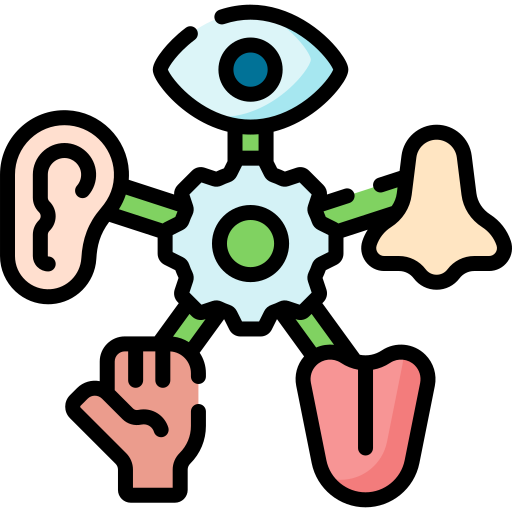
Sensory Processing
Helping children regulate responses to sensory inputs like sound or textures.

Activities of Daily Living
Teaching independence in brushing teeth, dressing and toilet training.

Visual Motor Integration
Developing hand-eye coordination needed for catching a ball or copying words.

Social & Emotional Regulation
Helping kids manage feelings, routines and peer interactions.
Joint Attention and Play
Helping kids develop eye contact and focusing through floor play.
Oral Motor Skills
Helping develop facial expressions and supporting speech development.
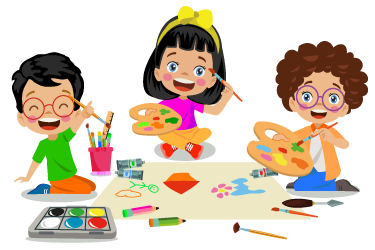
Visual & Plastic Arts
Using paint, markers, collage, clay, or finger paints. This is highly effective for visual-perceptual grounding and externalizing complex internal landscapes. • Example Application: Creating a "Self-Awareness Wheel" or a collage that represents a person's inner strengths versus their external stressors.
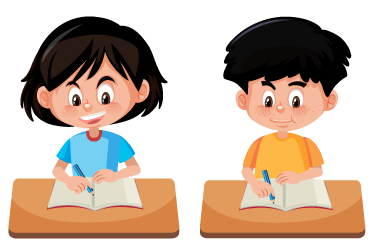
Language & Narrative Arts
Using creative writing, poetry, or structured storytelling. This helps reshape personal narratives and find meaning in difficult experiences. • Example Application: Writing "social-emotional stories" or metaphors where characters face and overcome a relatable emotional hurdle, helping the writer reframe their own reality.
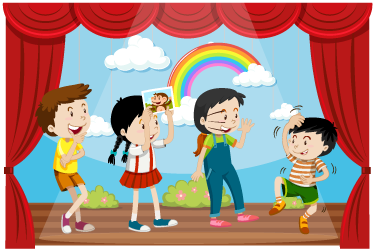
Drama & Symbolic Play
Incorporating psychodrama, role-play, puppets, or sandtray therapy. This creates a safe distance (a "psychological buffer") to explore relationships and social dynamics.
• Example Application: Using a puppet or a mini-monoact to express a boundary or a feeling that feels too threatening to say directly as ones
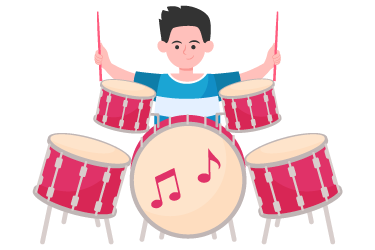
Movement, Sound, & Rhythm
Using somatic movement, dance, or simple musical instruments (like drums or singing bowls). This bypasses cognitive blocks entirely, tapping directly into the nervous system to release stored tension.
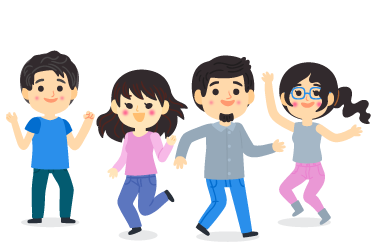
Dance and Movement Therapy
Dance and Movement Therapy (DMT) is a psychotherapeutic use of movement to promote emotional, social, cognitive, and physical integration. It operates on the principle that the mind and body are inseparable, meaning that changes in movement patterns can lead to changes in psychological well-being.